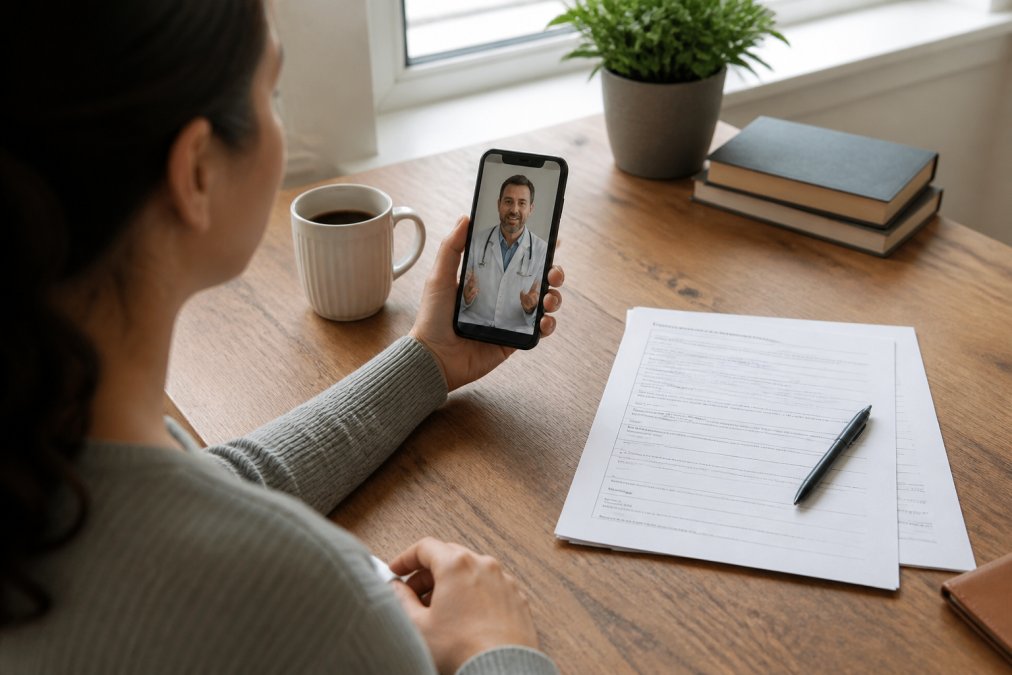
Learn how a Doctor For Disability Forms Online helps save time through virtual disability evaluations and Medical Leave Certification Washington services.

Managing a medical condition can already be physically and emotionally demanding. Adding travel, waiting rooms, paperwork, and multiple clinic visits to the process of obtaining disability documentation often makes the experience even more stressful. Fortunately, telehealth has changed how patients access healthcare, making disability evaluations more convenient and efficient than ever before.

Today, many individuals can connect with a Doctor For Disability Forms Online through secure virtual appointments, allowing them to complete medical evaluations from the comfort of their own homes. Instead of spending hours traveling to a clinic or waiting for an available appointment, patients can receive professional medical assessments with significantly less disruption to their daily lives.

Whether you’re applying for disability-related documentation or seeking Medical Leave Certification Washington, online disability evaluations can save valuable time while maintaining the quality and professionalism of medical care. If you live in Washington, understanding how virtual evaluations work can help you decide whether telehealth is the right option for your needs.

What Is an Online Disability Evaluation?

An online disability evaluation is a virtual medical appointment conducted through a secure telehealth platform. During the consultation, a licensed healthcare provider reviews your medical history, discusses your symptoms, evaluates your functional limitations, and determines what medical documentation may be appropriate based on your clinical condition.

Rather than replacing medical care, online evaluations provide another convenient way for eligible patients to access professional healthcare services. Many individuals appreciate the flexibility and accessibility offered by virtual appointments.

Less Time Spent Traveling

One of the biggest advantages of online disability evaluations is eliminating travel.

Traditional in-person appointments often require patients to:

  • Drive long distances
  • Arrange transportation
  • Take additional time off work
  • Navigate traffic
  • Find parking
  • Wait in crowded clinics

Virtual appointments remove many of these obstacles by allowing patients to connect with a healthcare provider from home or another private location. For individuals with mobility limitations, chronic pain, or transportation challenges, this convenience can make a significant difference. Patients throughout Washington increasingly choose telehealth because it saves time while improving access to healthcare.

Faster Appointment Scheduling

Finding an available in-person appointment can sometimes take days or even weeks, depending on provider availability. Many telehealth practices offer more flexible scheduling options, making it easier for patients to find appointment times that fit their personal and professional responsibilities.

A Doctor For Disability Forms Online may offer appointment availability that helps reduce unnecessary delays in beginning the evaluation process.

Flexible Scheduling

Virtual appointments often provide greater convenience for busy individuals.

Reduced Scheduling Conflicts

Patients can avoid spending an entire day attending a single medical appointment.

Shorter Waiting Times

Anyone who has visited a busy medical office understands that waiting is often part of the experience.

Patients may spend considerable time:

  • Completing paperwork
  • Waiting to check in
  • Sitting in waiting rooms
  • Waiting after being placed in an examination room

Online disability evaluations often streamline many of these administrative processes. Patients typically complete forms electronically before the appointment, reducing delays once the consultation begins. This allows healthcare providers to spend more time focusing on the evaluation itself.

Convenient Access to a Doctor For Disability Forms Online

One of the greatest benefits of telehealth is improved accessibility. A Doctor For Disability Forms Online allows eligible patients to complete evaluations without requiring unnecessary travel or extended time away from work or family responsibilities.

Virtual care is particularly valuable for individuals experiencing:

  • Chronic medical conditions
  • Mobility limitations
  • Fatigue
  • Recovery from surgery
  • Transportation difficulties

Healthcare becomes more accessible while maintaining professional standards of care.

Easier Document Sharing

Preparing disability paperwork often requires medical records, imaging reports, medication lists, specialist evaluations, and laboratory results. Instead of carrying large folders of paperwork to an office visit, many telehealth platforms allow patients to securely upload documentation before their appointment.

This helps physicians review important medical information in advance while reducing administrative delays. Organized digital records also make follow-up appointments more efficient.

Simplified Medical Leave Certification Washington

Some patients require documentation for temporary medical leave rather than long-term disability. When medically appropriate, providers may assist with Medical Leave Certification Washington by reviewing the patient’s medical condition, evaluating functional limitations, and completing necessary medical documentation based on clinical findings.

Telehealth simplifies this process by allowing much of the evaluation and documentation workflow to occur remotely. Patients appreciate being able to complete much of the certification process without multiple in-person visits.

Better Continuity of Care

Online evaluations also support better communication between healthcare providers and patients.

During virtual appointments, physicians can review:

  • Previous medical records
  • Current symptoms
  • Medication history
  • Functional limitations
  • Previous treatments
  • Follow-up recommendations

Because documentation is often shared electronically, patients spend less time repeating information during future appointments. This creates a smoother healthcare experience overall.

Reduced Stress Throughout the Process

Obtaining disability documentation can sometimes feel overwhelming. Online disability evaluations help reduce several common sources of stress by eliminating unnecessary travel, simplifying scheduling, reducing waiting times, and making medical consultations more accessible.

Patients often feel more comfortable discussing their health from familiar surroundings, allowing conversations to focus on their medical condition rather than the logistics of attending an office visit. At Disability Doc Online, virtual disability evaluations are designed to make the documentation process as convenient, secure, and patient-focused as possible while maintaining high standards of professional medical care.

Tips for Making the Most of Your Online Appointment

To ensure a smooth evaluation:

  • Test your internet connection before the appointment.
  • Charge your device or keep it plugged in.
  • Gather your medical records beforehand.
  • Prepare a current medication list.
  • Write down your symptoms and questions.
  • Choose a quiet, private location.
  • Log in a few minutes early.
  • Have identification available if requested.
  • Answer all questions honestly and accurately.
  • Follow your physician’s post-appointment instructions.

A little preparation helps maximize the value of your virtual consultation.

Is an Online Disability Evaluation Right for You?

While many patients benefit from telehealth, not every situation is appropriate for a virtual evaluation. Eligibility depends on your medical condition, the documentation required, and your healthcare provider’s clinical judgment.

If a virtual evaluation is suitable, it can offer a faster, more convenient way to complete disability-related medical assessments while reducing unnecessary travel and administrative burdens. Discussing your specific needs with your provider can help determine the best approach for your care.

Frequently Asked Questions

1. What is a Doctor For Disability Forms Online?

A Doctor For Disability Forms Online is a licensed healthcare provider who conducts disability evaluations through secure telehealth appointments and completes appropriate medical documentation based on clinical findings.

2. How do online disability evaluations save time?

They eliminate travel, reduce waiting room time, simplify document sharing, offer flexible scheduling, and allow patients to complete evaluations from home.

3. What is Medical Leave Certification Washington?

Medical Leave Certification Washington refers to medical documentation completed by a healthcare provider when clinically appropriate to support a qualifying request for medical leave.

4. Do I need to travel for an online disability evaluation?

No. Eligible patients can complete their evaluation remotely using a secure internet connection and a compatible device.

5. What should I prepare before my appointment?

Gather your medical records, medication list, specialist reports, imaging results, and notes about your symptoms and functional limitations.

6. Are online disability evaluations secure?

Yes. Reputable telehealth providers use secure, HIPAA-compliant platforms to protect patient privacy and confidential medical information.

7. Can I upload medical records before my appointment?

In many cases, yes. Secure document sharing allows physicians to review important medical information before or during your evaluation.

8. Will an online evaluation guarantee disability approval?

No. The physician provides an objective medical evaluation and documentation when clinically appropriate. Approval decisions are made by the relevant employer, insurer, agency, or reviewing organization.

9. Who benefits most from online disability evaluations?

Individuals with mobility limitations, chronic illnesses, transportation challenges, busy schedules, or those who prefer the convenience of telehealth often find virtual evaluations especially beneficial.

10. Why choose Disability Doc Online?

Disability Doc Online provides secure virtual disability evaluations, experienced physicians, patient-centered care, and professional assistance with disability-related medical documentation, helping patients complete the process conveniently and efficiently.

Final Thoughts

Online disability evaluations have transformed the way patients access disability-related healthcare services. By reducing travel, shortening waiting times, simplifying document sharing, and offering greater scheduling flexibility, telehealth allows patients to complete important medical evaluations more efficiently.

Working with a qualified Doctor For Disability Forms Online provides a convenient and professional way to obtain disability-related medical assessments when appropriate. Whether you’re seeking disability documentation or Medical Leave Certification Washington, virtual healthcare helps make the process more accessible while maintaining high standards of patient care.

For individuals throughout Washington, telehealth continues to provide a practical solution for saving time without compromising the quality of medical evaluations.

Schedule Your Virtual Disability Evaluation Today

If you’re looking for a trusted Doctor For Disability Forms Online, Disability Doc Online offers secure telehealth evaluations, experienced physicians, and compassionate support throughout the disability documentation process. Whether you need assistance with disability-related medical forms or Medical Leave Certification Washington, our team is committed to providing convenient, professional care tailored to your individual needs.


Learn how to discuss your health condition and work limitations with your doctor. Discover what to expect during an evaluation and why many people choose an FMLA Doctor Online Washington for convenient telehealth support.

Talking to your doctor about taking medical leave can feel overwhelming. Many people worry about what to say, what information to provide, or whether their condition is serious enough to discuss time away from work.

The truth is that healthcare providers are there to understand your symptoms, evaluate your medical condition, and help determine the most appropriate course of action. Open and honest communication can help ensure that you receive the care and documentation you may need.

With telemedicine becoming more common, many patients now choose virtual appointments because they provide a convenient way to discuss work-related health concerns from home. If you’re looking for an FMLA Doctor Online Washington or need guidance from a Doctor For Disability Forms Online, this guide will help you prepare for the conversation.

Let’s explore what you should know:-

1. Why Is It Important to Talk to Your Doctor About Medical Leave?

2. When Should You Discuss Medical Leave?

3. How Can You Prepare for Your Appointment?

4. What Information Should You Share?

5. What Questions Might Your Doctor Ask?

6. What Happens If You Need Medical Documentation?

7. How Can Telemedicine Make the Process Easier?

8. How Do You Choose the Right Doctor for Medical Leave Evaluations?

1. Why Is It Important to Talk to Your Doctor About Medical Leave?

Your health should always come first. If a medical condition is affecting your ability to work safely or perform your job duties, discussing your concerns with a healthcare provider is an important step.

A medical evaluation helps determine how your condition impacts your daily life and whether additional care or temporary work modifications may be appropriate. Many people search for an FMLA Doctor Online Washington because they want convenient access to professional medical guidance.

2. When Should You Discuss Medical Leave?

Every situation is different, but it may be time to speak with a healthcare provider if:

  • An injury limits your ability to work
  • A chronic illness affects daily activities
  • Recovery after surgery requires additional time
  • Pregnancy-related conditions create work challenges
  • Stress, anxiety, or other mental health concerns interfere with job performance

Seeking medical advice early may help you better understand your options.l

3. How Can You Prepare for Your Appointment?

Preparing in advance can help make your discussion more productive.

Consider gathering:

  • Medical records
  • Medication lists
  • Previous treatment information
  • Employer requirements
  • A summary of your symptoms
  • Information about your work responsibilities

Being organized helps your healthcare provider better understand your situation.

4. What Information Should You Share?

Honest communication is one of the most important parts of a medical evaluation.

You should explain:

Your Symptoms

Describe how your condition affects you physically or emotionally.

Your Daily Limitations

Explain activities that have become difficult.

Your Job Responsibilities

Help your doctor understand the physical or mental demands of your work.

Previous Treatments

Discuss medications, therapies, or other treatments you have received. Providing complete information allows your healthcare provider to make a more informed assessment.

5. What Questions Might Your Doctor Ask?

During the appointment, your healthcare provider may ask questions about:

  • When your symptoms started
  • How your condition has changed over time
  • Current treatments
  • Work-related challenges
  • Daily activities
  • Recovery expectations

The purpose of these questions is to understand your health and how it affects your ability to work.

6. What Happens If You Need Medical Documentation?

After evaluating your condition, the healthcare provider may discuss the next steps.

Depending on your individual situation, this may include:

Medical Recommendations

Guidance for treatment or recovery.

Follow-Up Care

Additional appointments if needed.

Work Leave Documentation

Medical paperwork when appropriate based on the evaluation.

Return-to-Work Planning

Recommendations for returning to work safely. Many patients looking for a Disability Paperwork Doctor appreciate having professional guidance throughout this process.

7. How Can Telemedicine Make the Process Easier?

Virtual healthcare has made medical evaluations more convenient for many people.

Benefits may include:

Attend Appointments from Home

No travel is required for many evaluations.

Flexible Scheduling

Telemedicine often provides more convenient appointment options.

Improved Accessibility

Helpful for patients with mobility or transportation challenges.

Faster Communication

Digital healthcare can simplify the evaluation process. Many people seeking a Doctor For Disability Forms Online appreciate the flexibility that telemedicine offers. At Disability Doc Online, patients can connect with licensed healthcare professionals through secure and convenient virtual appointments.


8. How Do You Choose the Right Doctor for Medical Leave Evaluations?

Choosing the right provider can help make the process easier and less stressful.

Look for a service that offers:

  • Licensed healthcare professionals
  • Secure telemedicine appointments
  • Clear communication
  • Convenient scheduling
  • Experience with medical leave evaluations

Many residents of Washington value online healthcare options that provide personalized support and professional guidance.


Frequently Asked Questions

1. Why should I talk to my doctor about medical leave?

If a medical condition affects your ability to work, a professional evaluation can help determine the appropriate next steps.

2. Who should see an FMLA Doctor Online Washington?

Individuals experiencing health conditions that may impact work responsibilities may benefit from an evaluation.

3. What should I bring to my appointment?

Medical records, medication lists, and information about your job duties can be helpful.

4. What is a Disability Paperwork Doctor?

It is a healthcare provider who evaluates medical conditions and may complete appropriate documentation based on the assessment.

5. What is a Doctor For Disability Forms Online?

It is a provider who offers virtual evaluations and may assist with work leave documentation when medically appropriate.

6. Can I complete the appointment from home?

Many telemedicine evaluations can be completed remotely.

7. What questions will my doctor ask?

Your provider may ask about symptoms, treatments, work duties, and daily limitations.

8. Will every patient receive medical documentation?

Recommendations depend on the healthcare provider’s professional evaluation.

9. Can I schedule follow-up appointments?

Additional evaluations may be recommended based on your situation.

10. How do I get started?

Scheduling an online consultation is often the first step.

Final Thoughts

Talking to your doctor about medical leave does not have to be stressful. Preparing for the conversation and sharing accurate information can help your healthcare provider understand your condition and recommend appropriate next steps.

Whether you are recovering from an illness, managing a chronic condition, or facing temporary health challenges, seeking timely medical advice can help you make informed decisions about your health and work responsibilities.

Get Convenient Telehealth Support with Disability Doc Online

If you’re looking for a trusted FMLA Doctor Online Washington, Disability Doc Online provides secure and convenient telemedicine evaluations designed to help patients receive professional medical guidance from home.

Whether you need assistance from a Disability Paperwork Doctor, support from a Doctor For Disability Forms Online, or medical leave evaluations in Washington, schedule your online consultation today and take the next step toward protecting your health and well-being.

See how a virtual doctor for chronic pain works in 2026, from video visits to disability paperwork. Learn what to prepare and how to get certified fast.

Table of Contents

Last Updated: September 14, 2026

How a Virtual Doctor for Chronic Pain Works

A virtual doctor for chronic pain is a licensed physician who evaluates, documents, and manages chronic pain conditions through a secure video visit rather than an in-person appointment. This guide from Disability Doctors Online explains what happens during that visit, how to prepare, and how the documentation supports a disability claim.

You connect by video; the physician takes a full symptom history, reviews medications, performs a guided physical and neurologic screening, and produces a written treatment plan, the document insurers and state agencies actually read.

What Happens During a Video Visit

A visit follows a predictable sequence:

  1. Identity and consent verification
  2. Symptom history and pain assessment, including pain levels and functional limits
  3. Medication review, including current prescriptions and side effects
  4. Guided physical examination and neurologic screening you perform on camera
  5. Discussion of imaging, prior records, and specialist notes
  6. Treatment plan, referrals, and documentation
  7. Scheduling the follow-up appointment
A person in comfortable clothes sitting on a living room couch holding a smartphone during a video call with a doctor, notebook and prescription bottles on the coffee table beside them, soft afternoon light through a window

The examination step surprises people. You can demonstrate range of motion, gait, grip strength, and balance on camera, and a physician who knows what to look for can document objective findings from a well-run video visit. Imaging and injections still require an in-person referral.

Pro Tip
Before the call, walk ten steps away from your camera and back. Clinicians use that footage to assess gait and balance, and it becomes part of the clinical evaluation. Most patients never think to do this.

Telemedicine Services for Disability Claims: What They Cover

Telemedicine services for disability claims cover the clinical evaluation and the paperwork that follows: certification of your condition, functional limitations, expected duration, and treatment plan. They do not replace the state agency’s decision or guarantee approval.

A physician certifies that you have a condition and describes how it limits you; the agency then applies its own rules to that evidence. Strong documentation makes the agency’s job easier; weak documentation gives them a reason to deny.

What a remote physician can typically provide:

  • A written evaluation of your condition and functional capacity
  • Certification supporting a disability claim
  • Medication management and prescription refills
  • Referrals to in-person specialists when imaging or procedures are needed
  • Follow-up documentation if your condition changes

What they cannot provide remotely: controlled substance prescriptions in most situations, injections, imaging, and hands-on procedures. Anyone promising those through a video visit alone is overstating what is possible.

How to Document Chronic Pain for Disability

Documenting chronic pain for disability means building a record that shows three things: a diagnosed condition, measurable functional limits, and consistency over time. Specific, dated, repeated observations win claims; vague descriptions lose them.

The most common mistake is treating documentation as a single appointment. It is a record, and agencies look for patterns that require more than one entry.

Pain Journals and Symptom History That Hold Up

A pain journal that holds up in a claim has five elements. Anything less reads as a diary rather than evidence.

Element Weak Version Strong Version
Date and time “Last week” “March 3, 8:15 a.m.”
Pain level “Bad day” “7 out of 10, up from 4”
Function lost “Couldn’t do much” “Could not drive or lift groceries”
Trigger Not recorded “After 20 minutes standing”
Action taken Not recorded “Rested 2 hours, took prescribed medication”

Log daily, even on good days. A record that only appears on bad days looks curated. Consistency is the signal agencies trust.

Watch Out
Do not describe pain in emotional terms only. “It was unbearable” tells a reviewer nothing they can score. Pair every emotional statement with a functional one: what you could not do, for how long, and what it cost you the next day.

HIPAA-Compliant Telehealth for Pain: Security You Can Verify

HIPAA-compliant telehealth for pain means the platform encrypts video, stores records on secured servers, and restricts access to authorized clinical staff. Verify this before your first appointment rather than taking it on faith.

Ask three questions before you share anything:

  • Does the platform use end-to-end encrypted video?
  • Where are records stored, and who can access them?
  • Will you receive a written notice of privacy practices?

A legitimate provider answers all three without hesitation. If a service cannot explain how your records are protected, that is your answer.

The HHS guidance on telehealth and HIPAA sets out how covered entities may use remote communication technologies, including which platforms meet the standard and what disclosures patients are entitled to. Reading it takes ten minutes and tells you exactly what to expect.

Key Takeaway
Security is not a feature you hope for. It is a question you ask. A provider that cannot explain its encryption and record handling in plain language has not earned your medical history.

Medication Reviews, Remote Monitoring, and Care Coordination

Medication review is where remote care earns its keep. A physician who sees your full prescription list can catch interactions, duplication, and drugs that stopped working months ago, a common problem for patients juggling prescriptions from several clinicians.

The Controlled-Substance Question Nobody Answers

Opioids and other controlled substances are regulated at both the federal and state level, and the rules for prescribing them over video are not uniform.

  • Federal framework. The DEA sets the baseline for controlled-substance prescribing, and the Ryan Haight Act generally requires an in-person medical evaluation before a practitioner may prescribe a controlled substance, with defined exceptions, including certain telemedicine allowances that have been extended and revised repeatedly (dea.gov). The rules you read about last year may not be the rules in force today.
  • State overlay. States add their own restrictions on top of the federal floor. Some require an in-person exam before any controlled-substance prescription; some permit it after a video evaluation; some limit quantity, duration, or refills. A clinician licensed in your state must follow your state’s rules, not the platform’s home state.
  • What this means for you. If your pain regimen includes a controlled substance, ask the platform directly: can this clinician prescribe or continue my controlled medication under my state’s rules, and if not, will they coordinate with a local prescriber who can? A provider that cannot answer clearly is not set up to manage your case.

Non-controlled medications, NSAIDs, muscle relaxants, certain neuropathic agents, topicals, generally carry fewer telehealth restrictions, which is why many virtual pain practices focus there.

How Wearable Data Actually Reaches Your Clinician

Remote monitoring only works if the data gets into the record. Three common paths exist, and they are not equally useful:

  1. Patient-reported export. You open your phone’s health app, export a summary, and upload it to the patient portal before the visit. This is the most widely supported method and the least automated.
  2. Platform integration. Some telehealth platforms connect directly to Apple Health or Google Fit and pull step count, sleep, and heart rate into the chart. Availability varies by platform.
  3. Manual log. You keep a spreadsheet or paper log and read the numbers during the visit. Low-tech, but it works and it is fully under your control.

Clinicians look not for a single number but for a pattern that supports or contradicts your reported symptoms. A patient who reports being unable to walk to the mailbox but whose step data shows 8,000 steps a day has a documentation problem; a sharp drop after a procedure is corroboration.

Pain-tracking apps work the same way: a daily 0-to-10 rating with a timestamp and a note about what you could not do that day beats a paragraph written once a month.

Let’s See If You Qualify →

Pro Tip
Before your visit, export the last 30 days of step count, sleep, and heart rate from your phone’s health app and upload it to the portal. Thirty days is long enough to show a pattern and short enough to stay readable. Bring the same window of your pain journal so the two line up.

Care Coordination Is a Document, Not a Feeling

Chronic pain rarely has one cause, so a multidisciplinary approach works better than a single specialty, but “coordination” only counts if it produces a written artifact. The virtual physician requests records from your physical therapist, neurologist, and primary care doctor, reviews them, and folds the findings into one treatment plan with a single set of functional limitations.

That consolidated plan is what a disability reviewer reads. Separate specialist notes with no synthesis force the reviewer to guess how the pieces fit, and guessing usually goes against the claimant. One coherent, signed and dated plan removes the guesswork.

Watch Out
Do not assume your providers are already talking to each other. In most health systems they are not, and records do not move unless someone requests them. Ask your virtual physician which records they will request, and follow up to confirm the request was sent.

Insurance, State Disability, and What Gets Covered

Coverage for a virtual pain visit depends on three things: your plan type, the billing code the clinician submits, and whether the platform is in-network. Most patients check only the first and are surprised by the bill.

Here is how the pieces actually work.

Plan Types and How They Treat Telehealth

  • Commercial employer plans. Most now cover telehealth at parity with in-person visits, but parity is a plan-by-plan choice, not a federal guarantee. The code matters: a video visit billed as a standard office evaluation (for example, an established-patient E/M code) is usually reimbursed; a visit billed as a non-covered convenience service may not be.
  • Medicare. Medicare Part B covers many telehealth services, including evaluation and management visits, but the rules on where you can be located and which clinicians qualify have shifted repeatedly. Confirm current coverage before you schedule.
  • Medicaid. Coverage is set state by state. Some programs cover telehealth broadly; others restrict it to specific specialties or specific originating sites.
  • HDHPs paired with an HSA. Telehealth can be treated differently from other services for deductible purposes. Ask whether the visit is subject to your deductible or exempt from it.

The Questions That Actually Get You a Straight Answer

When you call your insurer, do not ask “is telehealth covered?” Ask these instead:

  1. Is this specific provider in network for a video visit?
  2. What CPT code will be billed, and what is my cost-share for that code?
  3. Does the visit apply to my deductible, and what is my remaining balance?
  4. Do I need prior authorization for a specialist evaluation?
  5. Is the platform fee billed separately from the clinical visit?

Write the answers down with the representative’s name and the reference number for the call. If a claim is later denied, that record is what you use to appeal.

State Disability Programs Set Their Own Rules

State disability insurance programs, the ones paying wage-replacement benefits, not the federal program, each publish their own forms and definitions of sufficient medical evidence, so a form that satisfies one state’s agency may be rejected by another. Download the exact form your agency requires and bring it to the appointment rather than hoping the clinician guesses the right format.

Two failure patterns show up over and over:

  • The clinician completes a generic letter when the agency wanted a specific certification form with a provider signature block and a date of onset field.
  • The form is completed correctly but submitted after the agency’s filing window closes, so the claim is treated as late rather than incomplete.

Where the Money Actually Goes

A telehealth visit is not automatically cheaper. The clinical fee may be lower than an in-person specialist visit, but you may also pay a platform fee. For patients managing chronic pain, the avoided commute and waiting room are often the larger savings, not the visit fee itself.

Key Takeaway
Coverage is not one question, it is five. Get the CPT code, the cost-share, the network status, the prior-auth rule, and the platform fee in writing before the visit. That single page of notes is the difference between a clean claim and a three-month appeal.

Common Mistakes That Sink a Virtual Pain Claim

The biggest mistake is treating the visit as a formality. It is a clinical evaluation that produces the record your claim depends on.

Other common failures include:

  • No pain journal, or one that only covers bad days
  • Describing pain without describing lost function
  • Failing to list every medication, including over-the-counter drugs
  • Skipping the follow-up appointment, which breaks the continuity of care
  • Bringing no forms, then mailing them in later and losing weeks
  • Downplaying symptoms to seem stoic, which undercuts the record
Watch Out
Missing the follow-up appointment is the quiet killer. A gap in care reads as improvement to a reviewer, even when you were simply too unwell to book. Schedule the next visit before you end the current one.

Disability Doctors Online’s licensed physicians evaluate claims with the actual insurance and state disability forms, and support for physical, emotional, and mental disabilities is built into the same visit. Patients like Antonio, who had a prior denial from his primary care doctor, describe the difference as being evaluated rather than processed.

One patient, Brett, put it simply: his state disability insurance was approved, the visit happened over his cell phone, and the paperwork reached his employer without delay. That is the outcome the process is built for.

Conclusion

The hardest part of a chronic pain claim is not the medical evidence but assembling it into a record an agency can act on while you are already unwell. Most denials trace back to documentation gaps, not the severity of the condition.

Disability Doctors Online was built for exactly this problem. Same-day evaluations connect you with licensed physicians over a 100% online, HIPAA-compliant video visit. Those physicians evaluate your claim, review your medications, and provide the disability certifications and insurance paperwork support your case requires, all without a commute or a waiting room. For patients managing chronic pain, that convenience is the difference between filing and giving up.

SSA guidance on medical evidence for disability claims

Let’s see if you qualify.

Frequently Asked Questions

Can a virtual doctor provide a disability certification for chronic pain?

Yes. Licensed physicians can evaluate chronic pain through a video visit and complete disability certification forms, including state disability and insurance paperwork. A virtual doctor for chronic pain reviews your symptom history, medication list, and prior records, then documents functional limitations the way claims reviewers expect. The certification is only as strong as the evidence behind it, so bring imaging reports, treatment notes, and a pain journal to the appointment. Same-day evaluations are often available for people who cannot travel.

How do I document chronic pain for disability so my claim is not denied?

Build a paper trail that shows duration, severity, and function loss. Track pain levels daily, note which activities you cannot do, and keep records of every treatment tried, from physical therapy to injections. Ask your physician to describe limitations in concrete terms, such as how long you can sit or stand, rather than just labeling the pain. Consistency matters: if your journal says you cannot lift more than 10 pounds, your exam notes should say the same thing.

Is telemedicine effective for long-term chronic pain management?

For many patients, yes. Virtual visits work well for medication reviews, follow-up appointments, and care coordination with specialists. A multidisciplinary approach, combining medication, physical therapy, and mental health support, can be managed largely through telehealth. The main limitation is that hands-on procedures like injections still require in-person care. Use virtual visits for ongoing management and reserve office trips for interventional pain treatment when your physician recommends it.

Are virtual pain management services covered by insurance?

Coverage varies by plan and state. Many commercial insurers and Medicare cover telehealth visits for chronic pain management, though copays and prior authorization rules differ. Before your appointment, call the number on your insurance card and ask three things: whether virtual consultation is covered, whether your specific diagnosis qualifies, and what documentation the plan requires. If you are filing for state disability benefits, keep copies of every visit summary and certification form.

Can online doctors sign disability forms: Yes, online doctors can sign disability forms. Learn how to get FMLA paperwork signed online and meet short-term.

Table of Contents

Last Updated: September 13, 2026

When Online Doctors Can Sign Disability Forms

Yes, online doctors can sign disability forms, provided the physician is licensed in your state and the form permits remote certification, but the real question is whether can online doctors sign disability forms your carrier will actually accept. A telehealth certification is a medical document completed by a licensed provider after a virtual consultation, and it carries the same weight as an in-person note when the issuing physician holds an active license in your jurisdiction. At Disability Doctors Online, we handle these evaluations daily for injured employees in California, New York, and Washington, so we see exactly where claims succeed and where they fall apart.

The catch most people miss: legality is not the same as acceptance. A physician can legally sign your short-term disability paperwork after a video visit, but your insurance carrier or employer’s leave administrator still has to accept it. That gap between “valid” and “accepted” is where denials happen.

Keep reading, and we’ll walk through the certification process, the documentation you need, and what to do when a claim stalls.

How to Get FMLA Paperwork Signed Online

Getting FMLA paperwork signed online follows a defined sequence. The Family and Medical Leave Act is a federal law enforced by the U.S. Department of Labor’s FMLA guidance, and it allows a licensed health care provider to certify a serious health condition. That provider does not have to be your primary care physician.

Here’s the practical order of operations:

  1. Request the official certification form from your employer or HR department.
  2. Complete the employee section before your appointment, not after.
  3. Book a virtual consultation with a licensed provider who practices in your state.
  4. Attend the video visit and describe your condition, limitations, and expected duration.
  5. Have the physician complete and sign the form.
  6. Submit the signed medical certification to your employer by their deadline.
A person sitting at a home desk using a smartphone for a video call with a doctor, FMLA paperwork and a pen visible beside a coffee mug, soft afternoon window light
Watch Out
The most common FMLA mistake is missing the employer’s return deadline, typically 15 calendar days from the request. A correctly signed form submitted late can still be rejected, and you may lose protected leave status.

The U.S. Department of Labor’s FMLA fact sheet confirms that a health care provider’s certification is required, and that the provider must be licensed or certified in the state where they practice.

Requirements for Short-Term Disability Certification

Short-term disability certification requires documented medical necessity, a defined leave period, and a physician signature from a qualified provider. Most carriers want the condition, the functional limitations, the treatment plan, and a return-to-work estimate on the form.

A clinical assessment supports all of it. The provider must show they actually evaluated you, not just stamped a page.

What carriers typically expect:

  • Your patient history and current diagnosis
  • Specific restrictions, such as lifting limits or standing tolerance
  • The expected duration of the leave
  • Treatment being pursued and any referrals
  • A signed and dated medical note

Long-term disability is a different animal. It usually involves a longer elimination period, stricter medical evidence, and often a review by the insurer’s own physicians. A single certification rarely carries a long-term claim on its own.

The Social Security Administration’s disability evaluation criteria shows how much evidence government programs demand, which is a useful benchmark for what private carriers scrutinize.

What to Do If Your Doctor Refuses to Sign Disability Forms

When your regular doctor refuses to sign, you have options. A refusal is not the end of your disability claim. Physicians decline for many reasons: unfamiliarity with the form, discomfort certifying a condition they did not treat, or simple time constraints.

Your next steps:

  • Ask the physician to document the refusal in writing.
  • Request your medical records so a new provider can review them.
  • Seek a second opinion from a provider who specializes in occupational or disability evaluations.
  • Use a telehealth service that focuses on medical certification.
  • Keep every form, note, and message organized in one file.
Pro Tip
Ask the refusing doctor to state the reason in your chart. A documented refusal plus your existing records gives the next provider a clean starting point, and it shows the insurer you actively pursued certification rather than abandoning it.

A patient of ours, Antonio from Thousand Oaks, ran into exactly this: “I had serious medical issues, but my PCP denied my disability. Dr. K evaluated and certified me.” It is a clear example of how can online doctors sign disability forms when a primary physician will not. The refusal did not end his claim.

Insurance Acceptance and Denial Mitigation

Insurance carriers accept telehealth certifications, but they reject sloppy ones constantly. Claim denial usually traces back to missing details, not to the fact that the visit happened online. The gap most articles skip is what happens after the denial letter arrives, and that process is governed by rules most claimants never hear about.

The insurance carrier is checking three things: is the provider licensed, is the documentation complete, and does the medical evidence match the claimed limitations. If any of those is thin, expect a denial.

Why telehealth-signed forms get denied

A common pattern in denied claims is not fraud or invalidity, it is a mismatch between what the form says and what the chart shows. Carriers flag these specific issues:

Let’s See If You Qualify →

  • The provider’s license state does not match the state on the claim
  • The form is signed but the attached records do not mention the same diagnosis
  • Restrictions listed (for example, “no lifting over 10 pounds”) are not supported by any clinical finding
  • The return-to-work date is open-ended or contradicts the treatment plan
  • The signature is present but the provider’s NPI or license number is missing

None of those are about the visit being virtual. They are documentation failures that happen in person too.

The appeal process most people do not know about

If your coverage runs through an employer, your disability plan is very likely governed by the Employee Retirement Income Security Act (ERISA). The U.S. Department of Labor’s ERISA claims procedure guidance sets minimum standards for how a plan must handle a denied claim, including a written explanation and a defined window to appeal. A few practical points:

  • You generally have a limited window to file an internal appeal, often 180 days for disability claims under ERISA, and missing it can forfeit your right to sue later.
  • Ask for the claim file and the specific plan provision the denial relied on. Carriers must provide it on request.
  • Submit new evidence with the appeal, not just a restatement of the original form. A supplemental note from the same provider may not move a denial; a fresh evaluation with objective findings can often help.
  • If the internal appeal fails, ERISA plans typically allow an external review or a civil action, but the record you built during the internal appeal is what a court will see.

For individual policies and state-administered programs, the appeal rules differ and are set at the state level, which is why knowing which system your claim falls under matters before you write the appeal letter.

How to reduce your risk of denial up front

  • Make sure the provider’s license matches your state
  • Confirm every field on the form is filled, including dates, NPI, and signatures
  • Attach supporting records when the supporting documentation is requested
  • Respond to any carrier request for more information quickly and in writing
  • Keep a copy of everything you submit, including fax confirmations and portal screenshots
Key Takeaway
The single biggest driver of denial is incomplete documentation, not the telehealth format. A fully completed form from a licensed provider is more likely to be accepted than a partially filled one from an in-person visit, and if it does not, the ERISA appeal window is the clock that matters most.

A claim denial is often reversible through appeal. The key is having a practitioner who documented your case thoroughly the first time and knowing which appeal track your plan uses.

State Rules for Online Disability Forms

State rules vary. State-specific regulations govern who can certify, what forms are required, and how benefit eligibility is determined. A provider licensed in your state, familiar with your state’s forms, is important, but “familiar” means knowing the actual form numbers and filing mechanics, not just the state’s name.

California

State Disability Insurance (SDI) is administered by the Employment Development Department and is funded through payroll deductions. The California Employment Development Department’s SDI overview explains the filing process and what a provider must attest to. Key mechanics:

  • The medical certification is submitted on the EDD’s own form (the practitioner completes the medical provider section; the claimant completes the patient section).
  • A provider must certify the disability began, the expected duration, and that the claimant cannot perform their regular or customary work.
  • SDI has a mandatory unpaid waiting period before benefits begin, and claims must be filed within a defined window after the disability starts.
  • California also runs Paid Family Leave (PFL), which is a separate benefit for bonding or caring for a family member, it is not the same as SDI and uses different certification.

New York

New York administers its own disability benefits program, and the certification requirements differ from California’s in both form and timing. The state also runs a separate Paid Family Leave program with its own documentation standards. A provider signing New York paperwork needs to be licensed in New York and complete the state’s specific forms.

Washington

Washington runs a paid family and medical leave system with distinct documentation standards and its own certification form. The state’s program is insurance-based and has its own eligibility thresholds, so a form that satisfies a private short-term disability carrier may not satisfy the state administrator without modification.

Why this matters for telehealth

A physician licensed in one state generally cannot certify a state-administered claim in another. That is a licensing rule, not a telehealth rule, but it is the single most common reason a telehealth-signed state form gets rejected. Before your appointment, confirm three things:

  1. The provider holds an active license in the state where the claim is filed.
  2. The provider has completed that state’s specific form before, not just a generic disability letter.
  3. The form version you have is current, state forms are revised, and an outdated version can be returned unsigned.
Situation Best Approach Why It Works
Standard short-term claim Telehealth certification Fast, licensed, complete
FMLA leave Video visit plus employer form Meets federal provider rules
PCP refused to sign Second-opinion evaluation Fresh assessment, clean records
Long-term disability Specialist review plus records Higher evidence threshold
State-administered claim (SDI, PFL, etc.) Provider licensed in that state, using that state’s form Meets the administrator’s specific requirements
Pro Tip
Ask the scheduling team which state forms the provider has completed before. A provider who has signed California EDD paperwork for years is not automatically the right fit for a New York or Washington claim, even if they are licensed in all three.

The practical takeaway: match the provider’s license and form experience to the exact program your claim runs through. That single step prevents more rejections than any other part of the process.

Conclusion: Next Steps for Your Claim

The paperwork can be challenging. If you are in California, New York, or Washington and your regular doctor will not sign, or you cannot get to an office, you do not have to wait weeks for an appointment.

Disability Doctors Online offers HIPAA-compliant video consultations, same-day disability evaluations, and direct help with insurance paperwork and forms. Our licensed physicians evaluate your claim, review your patient history, and provide the disability certification your employer and carrier need.

Let’s see if you qualify. Get started with Disability Doctors Online and get your forms signed without leaving home.

Frequently Asked Questions

Can a doctor refuse to fill out disability forms?

Yes. A doctor can decline to sign disability forms if they don’t believe the medical evidence supports your claim, if they aren’t familiar with your condition, or if their practice doesn’t handle paperwork. However, they can’t refuse based on discrimination. If your doctor declines, you can seek a second opinion from another licensed provider, such as a licensed provider through a telehealth service like Disability Doctors Online, who can review your records and complete the certification if appropriate.

Are online disability certifications legally valid for FMLA?

Yes, if completed by a licensed healthcare provider who meets FMLA criteria. The FMLA requires certification from a health care provider, and telemedicine visits count as valid evaluations. The provider must include diagnosis, expected duration, and medical necessity. Online doctors can sign FMLA forms as long as they are licensed in your state and follow HIPAA-compliant procedures. Always verify your employer accepts telehealth certifications, as some may have additional requirements.

What information must a physician include on a disability form?

A physician must include your diagnosis, medical history relevant to the disability, prognosis, expected duration of the condition, functional limitations, and a statement of medical necessity. For FMLA, they also need to specify the start date, frequency, and duration of leave. For short-term disability, insurance carriers often require supporting documentation like test results or treatment notes. Incomplete forms are a common reason for claim denials, so ensure your provider fills every section thoroughly.

How long does it take to get disability forms signed by an online doctor?

With a dedicated telehealth service, you can often complete a virtual consultation and have your forms signed the same day. The process includes an intake form, a video visit, and a clinical assessment. After the consultation, the physician reviews your medical records and completes the certification. Turnaround times vary, but many online providers offer same-day evaluations. If you use a traditional doctor, it may take days or weeks due to scheduling and paperwork backlogs.

Discover why disability claims get denied and how to appeal a denied disability claim. Learn medical evidence requirements and get approved faster.

Table of Contents

Last Updated: September 13, 2026

The Five-Step Sequential Evaluation: How the SSA Decides Your Claim

The Social Security Administration uses a five-step sequential evaluation to decide every disability claim, and understanding this sequence explains most denials before you ever file an appeal. At Disability Doctors Online, we walk clients through this framework because knowing where a claim failed is the first step toward fixing it.

The five steps, in order:

  1. Is the claimant working above substantial gainful activity? If monthly earnings exceed the SSA threshold, the claim stops here.
  2. Is the impairment severe? The condition must limit basic work activities for at least 12 months.
  3. Does the impairment match a listed condition? The SSA’s impairment listing manual defines qualifying medical conditions by severity.
  4. Can the claimant perform past relevant work? The SSA reviews work history against current functional limitations.
  5. Can the claimant perform any other work? A vocational expert weighs age, education, and residual functional capacity.

Most people understand why disability claims get denied only after seeing which step tripped them up. Steps two through five account for the overwhelming majority of denials, and each one maps to a fixable gap in evidence or paperwork.

7 Common Reasons Why Disability Claims Get Denied

Denials rarely come down to one dramatic flaw. They come from small gaps: a missing treatment record, an income threshold crossed by a few dollars, a form signed but not dated. Here are the seven reasons we see most often.

A person sitting at a kitchen table reviewing a disability denial letter with a laptop open and medical documents spread out, looking concerned but determined

1. Insufficient Medical Evidence

Medical evidence is the clinical documentation the SSA uses to verify that a qualifying medical condition exists and limits your ability to work. Treatment records, imaging, and physician statements all count. A common mistake is assuming a diagnosis alone proves disability. It does not. The SSA needs records showing duration, severity, and functional limitations, not just a label.

2. Earning Too Much Income (Substantial Gainful Activity)

Substantial gainful activity is the earnings level above which the SSA considers you able to work, regardless of your medical condition. Even part-time work can cross this line. Many claimants do not realize their income during the application period is reviewed, not just their income at filing.

3. Failure to Follow Prescribed Medical Treatment

If a claimant skips appointments, stops medication, or declines a recommended procedure without a documented reason, the SSA may conclude the condition is not as severe as claimed. The agency weighs whether treatment was “reasonable and consistent.” A gap in care needs an explanation in the file, not just a verbal one at a hearing.

4. Condition Does Not Meet Severity Requirements

Every qualifying medical condition must meet a duration and severity threshold. Symptoms that come and go, or that improve with treatment, often fail this test. This is where a well-documented residual functional capacity assessment matters most.

5. Incomplete or Inaccurate Paperwork

The most preventable denial category. Missing signatures, conflicting work history dates, and unanswered questions on the disability report all trigger denials. Application errors compound: one wrong date can cast doubt on an entire work history.

6. Failure to Cooperate With the Agency

The SSA requires claimants to attend consultative exams, respond to requests for records, and return forms on time. Missing a single consultative exam appointment can result in denial without further review.

7. Previous Denial History

A prior denial does not disqualify you, but it raises the bar. The SSA reviews whether new medical evidence or a changed condition supports a different outcome. Reapplying with the same records and no new documentation typically produces the same result.

Reason for Denial Root Cause Fix Before Refiling
Insufficient medical evidence Diagnosis without functional proof Obtain physician statement on limitations
Substantial gainful activity Earnings above threshold Document reduced hours or unpaid leave
Failure to follow treatment Unexplained gaps in care Add a written explanation to the file
Severity not met Symptoms improve or fluctuate Request an RFC assessment
Paperwork errors Missing dates or signatures Recheck every form before submission
Failure to cooperate Missed exam or deadline Confirm contact details with the SSA
Previous denial No new evidence submitted Gather updated treatment records

Disability Claim Medical Evidence Requirements: What the SSA Needs

Disability claim medical evidence requirements center on three things: proof of the condition, proof of duration, and proof of functional limitation. Records should cover at least the 12-month period the SSA evaluates, and they should come from acceptable medical sources such as licensed physicians and specialists.

What most guides miss is that volume is not the goal. A single clear statement from a treating physician describing specific functional limitations often carries more weight than hundreds of pages of routine visit notes. The SSA’s guide to medical evidence explains which sources qualify and how the agency weighs them.

Pro Tip
Ask your physician to describe what you cannot do, not just what condition you have. “Cannot sit for more than 20 minutes without repositioning” is evidence. “Chronic back pain” is a label.

Residual Functional Capacity: The Most Misunderstood Part of Your Claim

Residual functional capacity (RFC) is the SSA’s assessment of the most you can still do despite your impairments, and it is the single most decisive document in most disability files. It is not a diagnosis and it is not a severity rating. It is a work-capacity profile, and the SSA uses it at steps four and five of the sequential evaluation to decide whether any job in the national economy fits what you can still do.

What an RFC Actually Measures

An RFC is organized around the physical and mental demands of work, not around your symptoms. The SSA’s assessment captures:

  • Exertional capacity, whether you can perform sedentary, light, medium, heavy, or very heavy work, defined by how much you can lift and carry and how long you can sit, stand, and walk in an eight-hour day.
  • Postural limits, how often you can climb, balance, stoop, kneel, crouch, and crawl.
  • Manipulative limits, reaching, handling, fingering, and feeling.
  • Environmental limits, exposure to heights, moving machinery, temperature extremes, dust, fumes, and vibration.
  • Mental limits, your ability to understand, remember, and carry out instructions; respond appropriately to supervisors and coworkers; and handle changes in a routine work setting.

A vague RFC sinks claims. If your RFC says you can perform “sedentary work” without detailing postural or environmental restrictions, the SSA may find you capable of jobs that exist in the national economy. Sedentary work, for example, still presumes the ability to sit for about six hours in an eight-hour day and to lift up to ten pounds occasionally. If you cannot actually sustain that, the RFC needs to say so in those terms.

Let’s See If You Qualify →

How the RFC Gets Built, and Where You Can Influence It

The RFC is usually completed by an SSA disability examiner, sometimes with input from a state agency medical consultant who reviews your file but never examines you. That is the core problem: the person defining your work capacity often has never met you. Your treating physician’s opinion can carry significant weight, but only if it is specific, consistent with the treatment record, and supported by objective findings.

To make your RFC documentation count:

  1. Ask your physician to address function, not diagnosis. “Cannot sit for more than 20 minutes without repositioning” is evidence. “Chronic back pain” is a label.
  2. Cover a full workday, not a snapshot. Describe what you can do on a typical day and how often symptoms interrupt it, how many unscheduled breaks you need, how many days per month you would miss work.
  3. Match the SSA’s categories. Use the agency’s own vocabulary (sedentary, light, occasional, frequent, never) so the reviewer does not have to translate.
  4. Tie every limitation to a clinical finding. Reference the imaging, exam notes, or test results that support each restriction.
  5. Address mental limitations separately if they apply. Concentration, pace, and attendance limits are frequently overlooked and frequently decisive.
Pro Tip
A treating source opinion that lists a restriction the record does not support will be discounted, sometimes entirely. Specificity only helps when the clinical notes back it up. Ask your physician to document the objective findings alongside the functional limits in the same statement.

The SSA’s rules on evaluating medical opinions explain how the agency weighs treating source statements against consultative exam findings. Understanding that hierarchy is what separates a strong RFC from a disregarded one.

How to Appeal a Denied Disability Claim: Step-by-Step

To appeal a denied disability claim, you must file within 60 days of the denial notice, and the appeal level determines what evidence you can add. Missing that window means starting over.

  1. Read the denial letter carefully. It states the appeal deadline and the reason for denial.
  2. File a reconsideration request. This is the first appeal level, reviewed by a different SSA team.
  3. Submit new medical documentation. Reconsideration allows additional evidence.
  4. Request a hearing before an administrative law judge if reconsideration fails.
  5. Prepare for the hearing. A vocational expert and medical expert may testify.
  6. Appeal further if needed. The Appeals Council reviews hearing decisions.
Watch Out
The 60-day deadline is strict. Filing late usually means a new application and months of lost time, even if your case is strong.

How Long Does the Disability Appeal Process Take?

Most guides tell you the appeal “takes a while.” That is not useful when you are deciding whether to keep paying rent. Here is a realistic, stage-by-stage picture of what happens after a denial, so you can plan instead of panic.

The Post-Denial Calendar

Days 1-60: The appeal window. You have 60 days from the date on your denial notice to file. The clock starts on the notice date, not the day you open the envelope, so assume you have less time than you think. File early. You can submit additional evidence after filing.

Reconsideration (typically several months). A different SSA team reviews your file from scratch. This stage is often the longest wait relative to how little happens, many reconsiderations are decided on the same record that produced the denial, which is why submitting new medical evidence here matters. Do not treat reconsideration as a formality.

Hearing request and wait (often a year or more). If reconsideration fails, you request a hearing before an administrative law judge. This is the stage where most successful appeals are won, and it is also the longest. The wait varies widely by hearing office, some regions move far faster than others. The SSA publishes current average processing times by office, and checking yours is worth the five minutes.

Hearing decision (weeks to a few months after the hearing). The judge may issue a decision from the bench or, more often, mail it later. A fully favorable decision triggers payment processing, which adds more time before money arrives.

Appeals Council (months, and rarely successful). The Appeals Council reviews hearing decisions but takes only a small share of cases. It is a final check, not a second hearing.

What Actually Drives the Variation

Three things move your timeline more than anything else:

  • Your hearing office’s backlog. This is the single biggest variable and it is outside your control. Look it up.
  • How complete your file is when it arrives. Missing records cause the SSA to request them, wait, and sometimes decide without them. Every gap adds weeks.
  • Whether you request a hearing promptly. Delays in filing each appeal push your entire case back by the same amount.

What You Can Do While You Wait

Waiting is not passive. Use the time to:

  1. Keep treating. Continued care generates the records that win hearings. Gaps in treatment are read as improvement.
  2. Request your file. You are entitled to see the evidence the SSA used. Knowing what is missing tells you what to gather.
  3. Get a current RFC from your physician. A functional assessment dated close to your hearing carries more weight than one from two years earlier.
  4. Keep the SSA updated on your contact information and any new providers. A missed notice can cost you an appeal.
Watch Out
The 60-day deadline is strict, and so are the deadlines at each later stage. Filing late usually means starting a new application and losing months of potential back pay, even if your case is strong.
Key Takeaway
Plan for the long haul, but do not wait passively. The claimants who move fastest through the system are the ones who file on time, keep treating, and keep their file complete at every stage.

Frequently Asked Questions

Do most disability claims get denied the first time?

Yes. The Social Security Administration denies a majority of initial disability claims. Common reasons include insufficient medical evidence, income above the substantial gainful activity threshold, and conditions that do not meet severity requirements. Many people who are denied ultimately win on appeal, especially when they submit stronger medical documentation and follow the appeals process carefully. If your claim gets denied, request a reconsideration promptly rather than filing a new application.

What role does medical documentation play in claim approval?

Medical documentation is the foundation of any successful disability claim. The SSA needs treatment records, imaging results, physician statements, and functional assessments that clearly show how your condition limits your ability to work. Missing or vague records are one of the most common reasons disability claims get denied. Licensed physicians experienced with disability evaluations can review your history and provide necessary disability certifications to support your claim.

How can I improve my chances of disability approval?

Start by submitting complete medical records that cover your diagnosis, treatment history, and functional limitations. Follow your doctor’s prescribed treatment plan and keep every appointment. Report your work activity accurately so the SSA does not flag your claim for exceeding substantial gainful activity. If your claim is denied, file your appeal on time and consider adding a Residual Functional Capacity assessment that specifically addresses what you cannot do. Many applicants also find that a physician who understands SSA guidelines can provide professional certification for disability claims.

Discover the truth behind common short-term disability myths and learn how a Washington PFML Doctor and Washington Paid Family Medical Leave Doctor can help with medical evaluations and documentation.

Short-term disability benefits can provide valuable support when a temporary medical condition prevents someone from working. However, there are many misconceptions surrounding eligibility, medical evaluations, and the documentation process. These myths often discourage people from seeking appropriate medical care or delay them from requesting leave when they genuinely need it.

Modern telehealth services have also changed how patients access healthcare. Today, many individuals can complete medical evaluations virtually with a Washington PFML Doctor, making the process more convenient while reducing unnecessary travel and long clinic wait times.

Whether you’re recovering from surgery, managing a serious illness, or dealing with a temporary mental or physical health condition, understanding the facts about short-term disability is essential. If you’re located in Washington, this guide explains some of the most common myths and provides accurate information to help you make informed decisions.

What Is Short-Term Disability?

Short-term disability generally refers to benefits or leave that may be available when a qualifying medical condition temporarily prevents someone from performing their regular job duties. Unlike long-term disability, short-term disability is typically intended for medical conditions that are expected to improve over time with treatment and recovery.

Depending on the specific program, temporary leave may be associated with:

  • Recovery after surgery
  • Serious illness
  • Pregnancy-related medical conditions
  • Physical injuries
  • Certain mental health conditions
  • Other qualifying health concerns

Eligibility requirements vary depending on the applicable program, employer policies, and governing regulations.

Myth 1: Short-Term Disability Is Only for Serious Physical Injuries

One of the most common misconceptions is that only broken bones or major surgeries qualify for temporary disability leave. In reality, qualifying medical conditions may involve a wide range of physical or mental health concerns. Every situation is evaluated individually by a licensed healthcare provider based on medical evidence, functional limitations, and applicable program requirements. The severity of a condition is not determined solely by whether it is visible.

Myth 2: A Washington PFML Doctor Automatically Approves Leave

Many people believe that a physician has the authority to approve disability benefits or paid leave. This is not accurate. A Washington PFML Doctor performs a medical evaluation, reviews your health history, assesses your current condition, and completes appropriate medical certification when clinically supported. The physician’s responsibility is to provide objective medical documentation—not to approve or deny benefits.

Final eligibility decisions are made by employers, insurance providers, or the appropriate leave program administrators according to applicable rules.

Myth 3: You Don’t Need Medical Records

Some patients assume they can simply explain their symptoms during the appointment without providing supporting documentation. Although your discussion with the physician is important, medical records often help create a more complete picture of your health.

Helpful documentation may include:

  • Physician notes
  • Hospital records
  • Imaging reports
  • Laboratory results
  • Specialist evaluations
  • Medication history
  • Physical therapy documentation
  • Previous treatment records

Organized records allow healthcare providers to perform a more comprehensive evaluation. Patients throughout Washington often find that preparing their documentation before an appointment helps the process move more smoothly.

Myth 4: Mental Health Conditions Never Qualify

Another common misunderstanding is that only physical illnesses can support temporary disability or leave requests. Mental health conditions such as anxiety disorders, depression, PTSD, or other qualifying conditions may affect a person’s ability to perform work responsibilities.

Whether medical leave is appropriate depends on:

  • Clinical evaluation
  • Functional limitations
  • Treatment history
  • Individual circumstances
  • Applicable program requirements

Each case is unique and must be evaluated individually.

Myth 5: Telehealth Evaluations Are Less Professional

Some people worry that online medical evaluations are less thorough than traditional office visits.

In reality, secure telehealth appointments allow physicians to:

  • Review medical history
  • Discuss symptoms
  • Evaluate functional limitations
  • Review supporting documentation
  • Answer patient questions
  • Complete appropriate medical certification when clinically supported

Virtual care follows professional medical standards while offering greater convenience for many patients.

Myth 6: A Washington Paid Family Medical Leave Doctor Can Guarantee Approval

A Washington Paid Family Medical Leave Doctor provides professional medical documentation based on clinical findings.

However, physicians cannot guarantee:

  • Benefit approval
  • Leave approval
  • Employer decisions
  • Insurance determinations
  • Government program eligibility

Their role is to objectively evaluate your medical condition and complete documentation when medically appropriate. Understanding this distinction helps patients develop realistic expectations throughout the evaluation process.

Myth 7: You Should Wait Until Symptoms Become Severe

Some individuals delay seeking medical care because they believe they should wait until their condition becomes much worse. Delaying treatment may actually complicate recovery and make documentation more difficult.

It’s generally beneficial to speak with a qualified healthcare provider when symptoms begin interfering with:

  • Daily activities
  • Job responsibilities
  • Physical functioning
  • Emotional well-being
  • Recovery after surgery or illness

Early medical evaluation often supports better treatment planning and continuity of care.

Preparing for Your Medical Evaluation

Whether your appointment is virtual or in person, preparation helps ensure a productive consultation.

Before meeting with a Washington PFML Doctor, consider gathering:

  • Medical records
  • Medication list
  • Specialist reports
  • Hospital summaries
  • Imaging studies
  • Laboratory results
  • Employer-required forms
  • Notes describing your symptoms and daily limitations

Having organized information allows your physician to better understand your medical history.

At Disability Doc Online, patients receive secure telehealth evaluations designed to simplify the medical certification process while ensuring every assessment is based on careful clinical review and individualized care.

Benefits of Telehealth for Temporary Disability Evaluations

Telehealth has transformed how many patients access healthcare.

Advantages include:

  • No travel required
  • Flexible appointment scheduling
  • Reduced waiting times
  • Convenient home-based consultations
  • Secure document sharing
  • Improved accessibility for patients with mobility limitations
  • Easier follow-up appointments

These benefits make telehealth an excellent option for many eligible patients seeking temporary disability evaluations.

Tips for a Smooth Certification Process

To help your appointment go smoothly:

  • Schedule your evaluation early.
  • Gather all medical records.
  • Prepare a current medication list.
  • Write down your symptoms.
  • Test your internet connection before virtual visits.
  • Choose a quiet, private location.
  • Answer questions honestly.
  • Keep required paperwork nearby.
  • Ask questions if anything is unclear.
  • Follow your physician’s recommendations after the evaluation.

Proper preparation helps reduce delays and supports a more comprehensive medical assessment.

Frequently Asked Questions

1. What is short-term disability?

Short-term disability generally provides benefits or job-protected leave for eligible individuals who are temporarily unable to work because of a qualifying medical condition.

2. What does a Washington PFML Doctor do?

A Washington PFML Doctor evaluates your medical condition, reviews your medical history, and completes appropriate medical certification when clinically supported.

3. What is a Washington Paid Family Medical Leave Doctor?

A Washington Paid Family Medical Leave Doctor provides medical evaluations and documentation that may be required for Paid Family and Medical Leave requests based on professional clinical findings.

4. Can mental health conditions qualify for temporary disability or leave?

Depending on the individual’s condition, functional limitations, and applicable program requirements, certain mental health conditions may qualify when supported by appropriate medical evaluation.

5. Do I need medical records for my evaluation?

Yes. Medical records help your physician better understand your health history and complete a thorough medical assessment.

6. Can disability evaluations be completed online?

Yes. Many eligible patients can complete evaluations through secure telehealth appointments.

7. Does a physician approve disability benefits?

No. Physicians provide objective medical documentation. Benefit decisions are made by employers, insurance providers, or program administrators.

8. How should I prepare for a telehealth evaluation?

Gather your medical records, medication list, treatment history, employer paperwork, and prepare to discuss your symptoms honestly with your physician.

9. Are telehealth evaluations secure?

Yes. Reputable telehealth providers use secure, HIPAA-compliant platforms to protect patient privacy and confidential medical information.

10. Why choose Disability Doc Online?

Disability Doc Online offers convenient telehealth evaluations, experienced physicians, compassionate patient care, and professional medical documentation services to help patients navigate temporary disability and medical leave evaluations with confidence.

Final Thoughts

There are many misconceptions surrounding short-term disability, but understanding the facts can help you navigate the process with greater confidence. Temporary disability evaluations are based on professional medical assessments, clinical findings, and appropriate documentation—not assumptions or automatic approvals.

Working with an experienced Washington PFML Doctor allows eligible patients to complete medical evaluations conveniently through secure telehealth appointments. Whether you’re consulting with a Washington Paid Family Medical Leave Doctor regarding a qualifying medical condition or preparing for your first evaluation, having accurate information and organized medical records can make the process much smoother.

For individuals throughout Washington, telehealth continues to improve access to compassionate, high-quality medical care while simplifying temporary disability evaluations.

Schedule Your Virtual Medical Evaluation Today

If you’re looking for an experienced Washington PFML Doctor, Disability Doc Online offers secure telehealth evaluations, comprehensive medical assessments, and professional assistance with medical certification when clinically appropriate. Whether you need guidance from a Washington Paid Family Medical Leave Doctor or require documentation for a qualifying medical condition, our experienced physicians are committed to providing compassionate, patient-centered care throughout every step of the process.

Learn how mental health conditions can impact work performance, when PFML Certification Washington may be appropriate, and how an FMLA Doctor Online Washington can help with medical evaluations.

Mental health is an essential part of overall well-being, influencing how we think, feel, make decisions, and interact with others. While everyone experiences occasional stress or emotional challenges, some mental health conditions can significantly affect a person’s ability to perform daily activities, including workplace responsibilities.

Conditions such as anxiety disorders, depression, post-traumatic stress disorder (PTSD), bipolar disorder, and other mental health concerns may impact concentration, productivity, communication, and emotional resilience. In some situations, healthcare providers may recommend temporary leave from work to allow individuals time to focus on treatment and recovery.

Understanding how mental health conditions affect work can help employees recognize when professional medical support may be beneficial. For individuals in Washington, telehealth has also made it easier to access qualified physicians for evaluations related to PFML Certification Washington and consultations with an FMLA Doctor Online Washington when medically appropriate.

Understanding Mental Health and Workplace Performance

Mental health conditions affect people differently. Some individuals experience mild symptoms that have little impact on their professional lives, while others may find that their condition makes it difficult to perform regular job duties.

The severity of symptoms often changes over time and may be influenced by treatment, workplace demands, stress levels, and overall health. Mental health challenges are legitimate medical concerns that deserve the same professional attention as physical health conditions.

Common Mental Health Conditions That May Affect Work

Several mental health conditions can interfere with workplace performance.

These may include:

  • Anxiety disorders
  • Depression
  • Post-traumatic stress disorder (PTSD)
  • Obsessive-compulsive disorder (OCD)
  • Bipolar disorder
  • Panic disorder
  • Adjustment disorders
  • Certain stress-related conditions

Every individual experiences these conditions differently, making personalized medical evaluation essential.

Ways Mental Health Can Affect Job Performance

Mental health conditions may influence several aspects of daily work.

Difficulty Concentrating

Many individuals experience reduced focus, making it harder to complete complex tasks or maintain attention throughout the workday.

Reduced Productivity

Persistent emotional distress can affect motivation, energy levels, and overall work performance.

Increased Fatigue

Mental health conditions often contribute to physical exhaustion, even after adequate rest.

Communication Challenges

Some individuals may find workplace interactions more difficult during periods of emotional distress.

Decision-Making Difficulties

Concentration problems and overwhelming stress can make everyday decisions more challenging. Not everyone experiences these symptoms, and their severity varies widely from person to person.

When Should You Seek Medical Help?

It’s important to seek professional medical care if mental health symptoms begin interfering with your daily life or work responsibilities.

You should consider speaking with a healthcare provider if you notice:

  • Persistent anxiety
  • Ongoing sadness
  • Difficulty sleeping
  • Loss of motivation
  • Panic attacks
  • Difficulty concentrating
  • Emotional exhaustion
  • Increased absenteeism
  • Difficulty completing normal work tasks

Early evaluation and treatment often lead to better long-term outcomes. Patients throughout Washington increasingly use telehealth services because they provide convenient access to qualified healthcare professionals.

Understanding PFML Certification Washington

Some medical conditions may temporarily prevent an individual from performing essential work duties. When clinically appropriate, a healthcare provider may evaluate whether PFML Certification Washington is appropriate based on the patient’s medical condition and applicable program requirements.

During the evaluation, your physician may assess:

  • Current symptoms
  • Medical history
  • Functional limitations
  • Treatment plan
  • Expected recovery period
  • Ability to safely perform work-related activities

The physician’s role is to provide objective medical documentation based on clinical findings. Eligibility decisions are made by the appropriate program administrators.

How an FMLA Doctor Online Washington Can Help

Telehealth has made medical evaluations more accessible for many individuals managing mental health conditions. An FMLA Doctor Online Washington can conduct secure virtual evaluations to review your medical history, discuss your symptoms, evaluate functional limitations, and determine whether medical certification is appropriate based on professional medical judgment.

Virtual appointments may offer several advantages:

  • No travel required
  • Flexible scheduling
  • Private consultations
  • Secure document sharing
  • Convenient follow-up appointments
  • Greater accessibility

For many patients, telehealth removes barriers that may otherwise delay seeking care.

The Importance of Honest Communication

During your medical evaluation, open communication is essential.

Be prepared to discuss:

  • Your symptoms
  • How long they have been present
  • Previous treatments
  • Current medications
  • Counseling or therapy
  • Workplace challenges
  • Daily functional limitations

Providing honest and accurate information allows your physician to conduct a thorough medical assessment and prepare appropriate documentation when clinically supported. Avoid minimizing your symptoms, but also avoid exaggerating them.

Supporting Your Mental Health While Working

Not every mental health condition requires time away from work. Many individuals successfully manage their symptoms while continuing their careers with appropriate treatment and healthy coping strategies.

Helpful approaches may include:

  • Following your treatment plan
  • Attending therapy appointments
  • Taking medications as prescribed
  • Maintaining healthy sleep habits
  • Exercising regularly
  • Practicing stress management techniques
  • Taking scheduled breaks during the workday
  • Communicating with healthcare providers about symptom changes

Each person’s treatment plan should be individualized based on their specific needs.

Preparing for a Telehealth Evaluation

If you’re scheduling a virtual consultation, preparation can help your appointment run smoothly.

Before your appointment:

  • Gather your medical records.
  • Prepare a list of medications.
  • Write down your symptoms.
  • Test your internet connection.
  • Choose a quiet, private location.
  • Have identification available if requested.
  • Keep any employer-required paperwork nearby.

Being organized helps your physician complete a comprehensive evaluation. At Disability Doc Online, experienced physicians provide secure telehealth evaluations while carefully reviewing each patient’s medical history and current condition. Our goal is to deliver compassionate, individualized care and complete medical documentation when clinically appropriate.

Common Misconceptions About Mental Health Leave

Several misconceptions often discourage people from seeking appropriate care.

“Mental Health Isn’t a Real Medical Condition”

Mental health conditions are legitimate medical concerns that can significantly affect daily functioning and quality of life.

“Seeking Leave Means Weakness”

Taking medically necessary leave to focus on treatment and recovery demonstrates responsible self-care and should never be viewed as a personal failure.

“Everyone With Anxiety Needs Leave”

Not necessarily. Every situation is unique, and a healthcare provider determines what recommendations are medically appropriate based on an individual evaluation.

Frequently Asked Questions

1. Can mental health conditions affect work performance?

Yes. Mental health conditions may affect concentration, productivity, communication, decision-making, attendance, and overall workplace performance depending on their severity.

2. What is PFML Certification Washington?

PFML Certification Washington generally refers to medical certification completed by a healthcare provider when clinically appropriate to support a qualifying request under Washington’s Paid Family and Medical Leave program.

3. What does an FMLA Doctor Online Washington do?

An FMLA Doctor Online Washington conducts telehealth evaluations, reviews your medical history, assesses your condition, and completes medical certification when clinically appropriate.

4. Can anxiety or depression qualify for medical leave?

Depending on the individual’s condition, functional limitations, and applicable program requirements, some mental health conditions may qualify for medical leave when supported by a healthcare provider’s evaluation.

5. Can disability or leave evaluations be completed online?

Yes. Many eligible patients can complete evaluations through secure telehealth appointments.

6. What should I prepare before my appointment?

Prepare your medical records, medication list, treatment history, therapist or specialist reports, and any required employer paperwork.

7. Does medical certification guarantee leave approval?

No. Physicians provide objective medical documentation based on clinical findings. Approval decisions are made by the appropriate employer or program administrator.

8. Is telehealth confidential?

Yes. Reputable telehealth providers use secure, HIPAA-compliant platforms to protect patient privacy and medical information.

9. How long does a telehealth evaluation usually take?

The length varies depending on your medical history, symptoms, and documentation requirements.

10. Why choose Disability Doc Online?

Disability Doc Online provides secure telehealth evaluations, experienced physicians, compassionate care, and professional assistance with medical documentation, helping patients throughout the evaluation process with convenience and confidence.

Final Thoughts

Mental health conditions can affect many aspects of work, from concentration and productivity to communication and emotional well-being. Recognizing when symptoms begin interfering with daily responsibilities is an important step toward receiving appropriate care.

If a qualifying medical condition temporarily limits your ability to work, a professional medical evaluation may help determine whether PFML Certification Washington or other medical documentation is appropriate. Consulting with an experienced FMLA Doctor Online Washington through telehealth offers a convenient way to access professional healthcare while minimizing travel and scheduling challenges.

For individuals throughout Washington, virtual medical evaluations continue to make high-quality, compassionate care more accessible while supporting better mental health outcomes.

Schedule Your Confidential Telehealth Evaluation Today

If you’re seeking guidance regarding PFML Certification Washington or would like to consult with an experienced FMLA Doctor Online Washington, Disability Doc Online offers secure virtual evaluations designed to make accessing professional medical care simple and convenient. Our experienced physicians provide individualized assessments, review your medical history carefully, and complete appropriate medical documentation when clinically supported. Contact Disability Doc Online today to schedule your confidential telehealth appointment.